

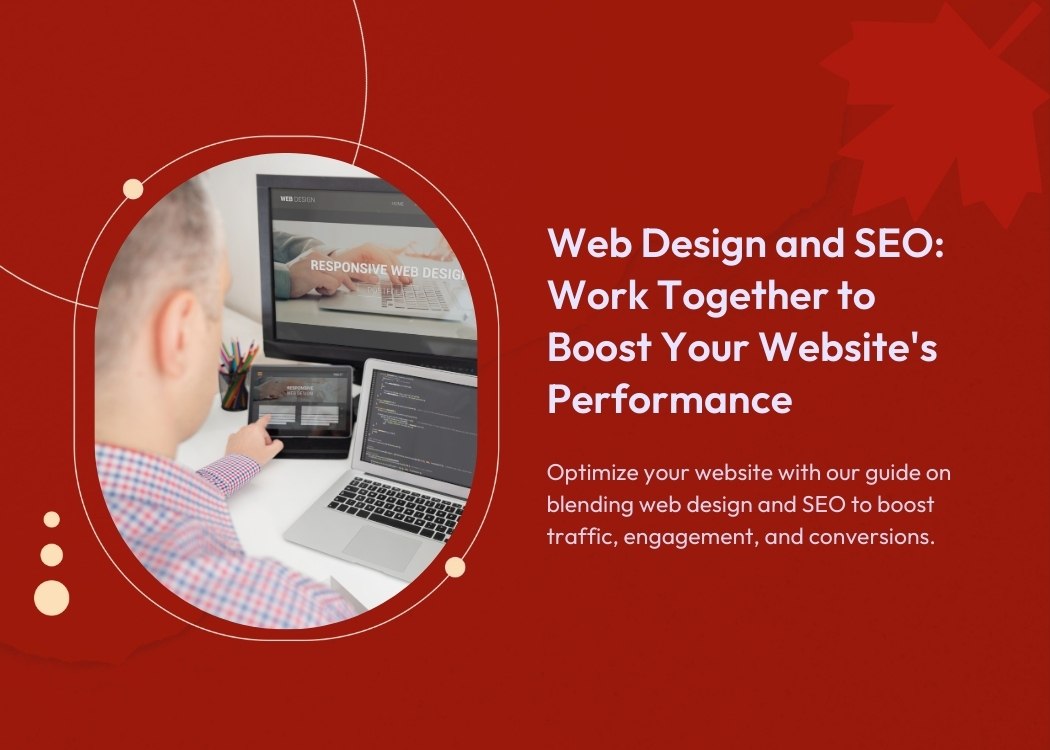
Let’s discuss something crucial for your online success: the powerful synergy between web design and SEO.
Are you struggling to get your website noticed? Or maybe your beautiful site isn’t bringing in the traffic and leads you expected? Many businesses face these challenges, but the good news is there’s a powerful solution that can turn things around.
Imagine your site looking great and ranking high on search engines, attracting organic traffic and converting visitors into loyal customers.
Sounds ideal, right? Well, it’s entirely possible.
This blog explores how strategic web design can boost your SEO performance, tackling pain points like poor user experience, slow load times, and low mobile optimization.
You’ll have actionable insights to transform your website into a powerful growth tool by the end.
Let’s unlock your online potential!
User Experience and Engagement
An intuitive, visually appealing, and mobile-friendly website keeps users happy and sends positive signals to search engines, improving your site’s visibility and ranking.
Intuitive Navigation and Site Structure
User experience (UX) is a critical factor in SEO, and intuitive navigation is at the heart of good UX. A well-structured site helps users find information quickly and easily, reducing bounce rates and increasing time spent on the site.
Clear, logical menus and internal linking enhance user satisfaction and make it easier for search engines to crawl and index your content. According to a study by GoodFirms, 94% of users say easy navigation is the most crucial website feature.
Visually Appealing Design
A visually appealing website keeps users engaged and encourages them to explore more pages. High-quality images, thoughtful color schemes, and balanced layouts create a positive user experience.
An attractive design can reduce bounce rates and improve dwell time, essential ranking factors for search engines. As per Adobe, 38% of people will only engage with a website if the content or layout is attractive.
Mobile-Friendly Responsive Design
With mobile devices accounting for over half of global web traffic, having a mobile-friendly website is essential. Responsive design ensures your site looks and functions well on all devices, providing a seamless experience for desktop, tablet, or smartphone users.
Google has stated that mobile-friendliness is a significant ranking factor, meaning that sites optimized for mobile are more likely to perform better in search engine results. Statista said mobile devices accounted for 54.8% of global website traffic in the first quarter of 2021.
Technical SEO Factors
Effective technical SEO is the backbone of a well-performing website, ensuring that search engines can easily crawl, index, and rank your site. Here are some key technical aspects of web design that directly influence SEO:
Clean, Efficient Code
The structure and cleanliness of your website’s code can significantly impact its performance and SEO. Clean, well-organized code makes your site faster and makes it easier for search engines to crawl and index your content.
This includes avoiding excessive scripts and plugins that can slow down your site. Google’s John Mueller has emphasized the importance of clean code for better indexing and ranking.
Fast Page Load Times
Page load speed is critical for both user experience and search engine rankings. Slow-loading pages can frustrate users, leading to higher bounce rates and lower engagement. Google has clarified that page speed is a ranking factor, especially with its emphasis on Core Web Vitals.
Tools like Google PageSpeed Insights and GTmetrix can help identify and fix issues that slow down your site. According to a study by Think with Google, 53% of mobile site visitors leave a page that takes longer than three seconds to load.
Proper Use of Header Tags
Header tags (H1, H2, H3, etc.) are essential for organizing content and helping search engines understand the structure of your page. Using these tags correctly can improve the readability of your content for both users and search engines.
The H1 tag should contain the page’s main topic, while the H2 and H3 tags should be used for subheadings and detailed sections. This hierarchical structure helps search engines index your content more effectively.
A SEMRush study found that adequately using header tags can significantly boost your SEO performance.
SEO-Friendly URL Structures
An SEO-friendly URL structure helps search engines understand the context and relevance of your pages. URLs should be descriptive, concise, and include relevant keywords. Avoid using long, complex URLs with unnecessary parameters.
Clear and straightforward URLs are more accessible for search engines to crawl and improve the user experience. According to Moz, descriptive URLs can improve click-through rates and enhance your site’s visibility in search results.
Content Presentation and Accessibility

Content presentation and accessibility are critical elements of web design that significantly impact SEO. Properly structured and accessible content improves user experience and enhances search engine visibility.
Clear Content Hierarchy and Formatting
- Improved Readability: A clear content hierarchy helps users and search engines easily navigate and understand your website. This involves using headings (H1, H2, H3, etc.), bullet points, and numbered lists to break down content into digestible sections. A well-structured page ensures that users can quickly find the information they need, which can reduce bounce rates and increase time spent on the site. According to a study by HubSpot, structured content can improve readability and engagement, which are positive signals for search engines.
Proper Use of Images with Alt Text
- Accessibility: Alt text for images is crucial for making your website accessible to users with visual impairments who rely on screen readers. Descriptive alt text provides context about the image content, enhancing the user experience for all visitors. The Web Content Accessibility Guidelines (WCAG) recommend using alt text to improve web accessibility, which can also positively impact SEO.
- Additional Ranking Signals: Search engines use alt text to understand the content of images, providing another opportunity to include relevant keywords. This can improve your site’s visibility in image search results and enhance overall SEO performance. According to Yoast, optimizing alt text is crucial in image SEO, contributing to better search rankings.
Strategic Placement of Important Content and Calls-to-Action (CTAs)
- Improved Engagement Metrics: Strategic placement of important content and CTAs can significantly boost user engagement. Placing critical information and CTAs above the fold ensures they are immediately visible to users, encouraging them to take action without scrolling. This can lead to higher conversion and lower bounce rates, both favorable for SEO. A study by Crazy Egg highlights that well-placed CTAs can dramatically increase user interaction and conversions.
- Enhanced User Experience: Organizing content to highlight the most critical information first ensures that users find what they need quickly. This improves their overall experience on your site and encourages them to explore further, which can lead to increased dwell time and more page views. Both of these metrics are important ranking factors for search engines. According to Nielsen Norman Group, the strategic placement of UI elements significantly impacts user behavior and satisfaction.
Conversion Optimization
Conversion optimization is a crucial aspect of web design that focuses on turning visitors into customers. Businesses can significantly improve conversion rates by implementing practical design elements and strategies.
Clear Paths to Conversion
- User Journey: Clear conversion paths are essential for guiding visitors through the sales funnel. This involves designing intuitive navigation and straightforward user flows that lead to conversion points, such as product purchases, contact forms, or newsletter sign-ups. According to HubSpot, simplifying the user journey can dramatically improve conversion rates by reducing friction and making it easier for users to complete desired actions.
- Effective CTAs: Prominent and compelling calls-to-action (CTAs) are crucial for conversion optimization. CTAs should be strategically placed throughout the website, using contrasting colors and persuasive language to draw attention. They should also be action-oriented, encouraging users to take immediate steps, such as “Buy Now,” “Sign Up,” or “Get Started.” Research by Crazy Egg shows that effective CTAs can significantly increase user engagement and conversions.
Prominent CTAs and Trust Indicators
- Building Trust: Trust indicators, such as customer testimonials, reviews, security badges, and case studies, are vital in building credibility and encouraging conversions. Including these elements on your website reassures visitors of your reliability and the quality of your products or services. According to Nielsen Norman Group, trust indicators are essential for reducing perceived risk and improving user confidence in purchasing.
- Visible CTAs: CTAs should be prominently displayed, ideally above the fold, to ensure they are immediately visible to visitors. Repeating CTAs at strategic points throughout the user journey can reinforce the desired action. Studies by OptinMonster indicate that well-placed CTAs can lead to higher conversion rates by making it easy for users to act when ready.
A/B Testing Design Elements
- Optimizing for Conversions: A/B testing is a powerful method for optimizing web design elements to improve conversions. Businesses can identify which design performs better by creating multiple versions of a page or element and testing them against each other. Elements such as headlines, images, CTAs, and layouts can all be tested to determine the most effective version. According to ConversionXL, A/B testing can significantly improve conversion rates by optimizing each element for maximum impact.
- Continuous Improvement: A/B testing should be ongoing, as user preferences and behaviors can change over time. Regular testing and optimization help ensure that your website effectively converts visitors. The process also provides valuable insights into user behavior, which can inform broader marketing and design strategies. VWO emphasizes the importance of a structured testing approach to achieve meaningful improvements in conversion rates.
Balancing Aesthetics and SEO
Balancing aesthetics and SEO is crucial for creating websites that are visually appealing and optimized for search engines. A harmonious blend of creative design and SEO best practices ensures that your website attracts, engages, and converts visitors while ranking high in search engine results.
Harmonizing Design and SEO Best Practices
- Aesthetic Appeal vs. Functionality: Beautiful designs can captivate users but should not compromise the website’s functionality or SEO. Using high-resolution images and intricate designs can slow down page load times, negatively affecting user experience and SEO rankings. According to Google, page speed is a significant ranking factor, and faster sites provide better user experiences and higher conversion rates.
- Optimized Visual Elements: Images and videos are essential for a visually engaging website, but they must be optimized for speed and SEO. Compress images without sacrificing quality and use modern formats like WebP. Ensure that all visual elements have descriptive alt text, contributing to accessibility and providing search engines with additional context about the content. According to Moz, alt text improves image search results and overall SEO.
- Responsive Design: Aesthetic design must be adaptable to different devices. Responsive design ensures your website looks great and functions well on desktops, tablets, and mobile devices. Google prioritizes mobile-friendly websites in its rankings, making responsive design a critical component of aesthetics and SEO. As per Statista, mobile devices accounted for over 54% of global web traffic in 2021, highlighting the importance of mobile optimization.
Collaboration Between Designers and SEO Professionals
- Integrated Teams: Successful websites result from the collaboration between designers and SEO professionals from the project’s outset. This integrated approach ensures that aesthetic decisions align with SEO best practices, creating a seamless user experience that performs well in search rankings. Forbes emphasizes integrating SEO with web design to achieve optimal results.
- SEO-Friendly Design Choices: Designers should be aware of SEO fundamentals such as clean code, fast load times, and proper use of header tags. Conversely, SEO professionals should understand the design vision to ensure that optimization efforts do not compromise the site’s aesthetic integrity. This collaboration leads to a balanced approach where aesthetics and SEO contribute to the website’s success. Search Engine Journal highlights collaboration is crucial in creating beautiful and functional websites.
Practical Tips for Balancing Aesthetics and SEO
- Minimalist Design: A minimalist design approach can enhance both aesthetics and SEO. It reduces clutter, improves page speed, and makes navigating the site easier for users and search engines. Minimalism focuses on essential elements, ensuring a clean and professional look while maintaining fast load times and a clear content structure.
- Structured Data: Incorporating structured data helps search engines understand your website’s content and context, improving its chances of appearing in rich snippets and other search features. Structured data also supports aesthetic elements like reviews, ratings, and product details, enhancing your site’s visual appeal and functionality. According to Schema.org, structured data is essential for improving search visibility and user experience.
Final Words
Web design and SEO are deeply intertwined, with each aspect significantly impacting the other. A well-designed website attracts and engages users, providing a solid technical foundation for strong search engine performance. By balancing aesthetics and SEO best practices, businesses can create websites that drive organic traffic and conversions effectively.
By integrating these strategies into your web design process, you can ensure your website looks great and performs excellently in search engine rankings. Remember, the key to success is the harmonious blend of design creativity and SEO precision.
